Project Rationale
Here is first key finding of Intercultural Youth Scotland’s report for the UN Decade for People of African Descent 2021:
There is an overwhelmingly strong demand for positive education around Black History to turn away from the brutality of our history, and to focus more on the contributions that Black people have made to the world historically.
Silence, Truth & Anti-Racist Thought, p.5
The report goes on to note:
There is a common feeling among young BPoC [Black people and people of colour] of being presented with a history that centres on slavery and dehumanisation, when there is a high demand to focus on Black History with a positive outlook.
Silence, Truth & Anti-Racist Thought, p.5
This project takes a step towards answering these demands while also recognising and exploring the legacies and impact of empire, racism and prejudice on Black sportspeople and sportspeople of colour, and on Scottish sports and culture more broadly.
The participants will determine the specific focus and direction of the project, but as a whole it has several overarching aims and goals:
Project Goals
- to highlight and celebrate the sporting achievements of people of colour in Scotland as reflected in the collections of the National Library.
- to draw attention to the National Library’s rich sporting collections.
- to produce new interpretative material and creative responses inspired by Watson’s story.
- to contribute to a better and more widespread understanding of the legacies of Scotland’s colonial history.
- to attract new audiences to the National Library, both online and in person, with a particular focus on young people, Black and minority ethnic groups, and sports enthusiasts.
- to offer funded experience with a national cultural institution on a significant project, and contribute to the development of a more diverse workforce in the cultural heritage sector.
- to foster relationships between national cultural and sporting institutions and under-served local communities and organisations.
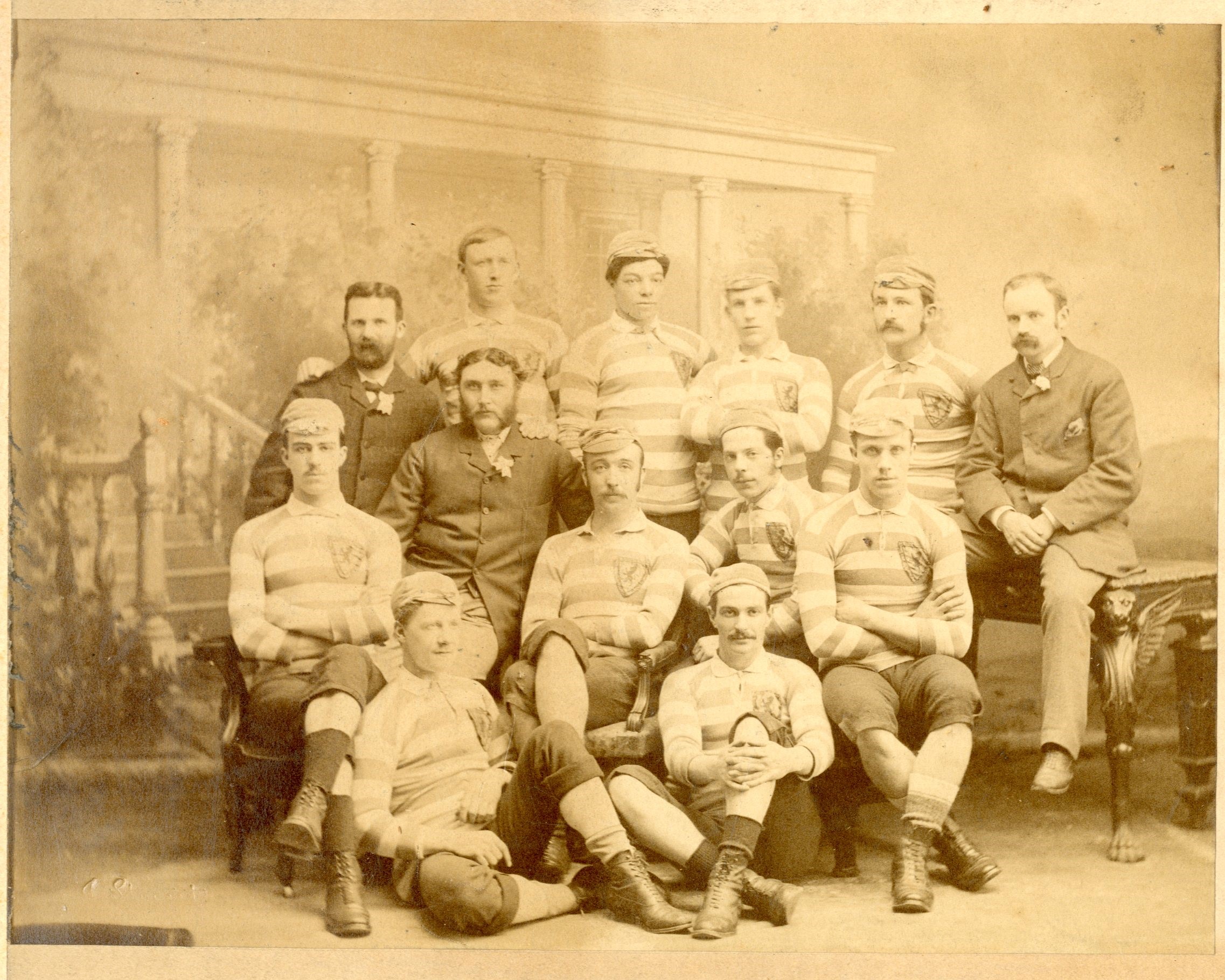
Image: Scotland’s 5-1 victory against England at the first Hampden Park in 1882, courtesy Scottish Football Museum. This is the first time the team were given caps and they are proudly wearing them in the picture. They are wearing blue and white hooped shirts. Andrew Watson is standing in the middle of the back row.